When Being A Stubborn Senior Becomes Unfair To Family & Caregivers

- Ask A Question!

- Ask A Question!
(866) 333-6550
Who we work with & why


Don't be fooledby the Questionable Tactics used by many assisted living sites
Assisted Living Directory has a No Spam Guarantee!
When Does Being A Stubborn Senior Become Unfair To Those Who Care About You?
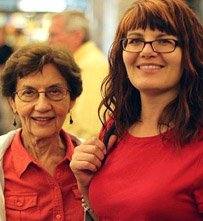
Summary:Understandably, many seniors wish to hold onto their independence as long as possible. However, when health or other issues start interfering with the ability to manage daily tasks and activities, and seniors or aging parents refuse to ask for and accept help – the burden of long-distance care is often-times unfairly placed on family members.
Article By:Assisted Living Directory
We have another discussion on our site about the importance of being an assertive senior. This is a page that talks about seniors needing to ask the tough questions about their health and well-being from their doctors, and to challenge their doctors and their caregivers when they believe that they are not being cared for properly, or if they believe they are receiving an incorrect diagnosis, advice – or if they are being ignored. We felt that this was an important subject since many aging parents and seniors are less equipped and capable of ‘speaking up’ when necessary, and are less likely to show their assertiveness at the times when they need it the most.
We encourage seniors to show their assertiveness to make sure they receive the care and attention that they need and deserve.
So what happens when a senior is not only unassertive about their health can care, but are to the point of being stubbornly nonchalant or indifferent? This is where their attitude, whether they realize it or not, can become unfair to everyone involved – especially family and loved ones.
I’d like to share a personal story about stubbornness, and how it is affecting my family.
I wrote, and did a video last year about my mother-in-law who was facing stage-3 cancer. She is 82 years old, and aside from this, she has been a model of health and independence throughout her whole ‘senior existence.’ She’s the type that eats all-organic foods, exercises and does yoga, and for an 82-year-old, she looks fantastic. She’s lived alone for the past 15 years or so, and has been in the same house in a small town for about 50 years. She still works, just because she wants to.
Very obviously, she is a person who cherishes her independence.
During her struggle with the cancer, she, at times, was very unassertive, and did not press her doctors about all of the possible options for her treatment, or even what the correct diagnosis was, or the severity of it (which was, at times questionable). She even went as far as to not even acknowledge that she was sick (by doing so, she felt that she wasn’t giving her illness ‘more power’ over her). We, as her family, were forced to make numerous trips to see her, and accompany her to her appointments to act as her voice of reason, and support with her doctors and caregivers. We believe that had we not stepped in, she would not have been cared for as well, and in turn, may not still be with us today.
Let’s flash-forward a year to the good news. She has apparently beat the actual cancer, which we are all thankful for, and thrilled about. She had several months of being back to her normal, energetic, independent self.
However, some new, unexpected issues have come up that have challenged our whole family, and have made us question whether she is receiving the type of care she needs. We are also questioning whether her doctors are addressing her issues correctly.
As a result of the chemo that she received, she has developed a serious disorder that makes the muscles in the body extremely weak – to the point of not being able to walk but only a few steps before needing to rest. Driving is definitely out of the question, which is a huge problem, since she lives alone.
The problem for us, as her family that lives well over 1000 miles away, is that again, she is not acknowledging that she is very ill again, and for us to get the straight story from her over the phone is very difficult. She is being stoic, and quite stubborn about her health, and about maintaining her independence. She refuses to ask neighbors or friends for any help whatsoever, and any advice that we, as her family, offer her is usually immediately dismissed. We have contacted several neighbors who are more than willing to help her, and to check in on her, but she refuses the help as, in her words “She does not want to be a burden.”
Our other idea, which was also dismissed was to call her local Area Agency on Aging to find out what services might be available to help her with her “ADL’s” or “Activities of Daily Living. We found out that there are services in her area to help her with transportation to shopping and appointments, and even caregivers who can check on her by phone, and in-person several times a week. This all would be a perfect solution for the time-being – however, she dismissed this idea since it has a lengthy application process (in her view) and since she still believes that she doesn’t need help.
Her stubbornness has now crossed the line into being unfair to her family.
Because she refuses to be helped, and won’t ask for it even when it is readily available to her through her neighbors, and through her community services, the burden then is on her extended family, all of whom live in different states. Unfortunately, our time and monetary resources are finite, and there will be a time that she will need care more than just the occasional “checking in.”
We feel that the time is right for her to start looking into assisted living.
My mother-in-law fortunately lives in an area where there are numerous excellent assisted living facilities – many of which already have her friends living there as residents. In such an environment, she can focus on truly healing, and not worrying about things like navigating her steep staircase to take her laundry to the laundry-room in her basement, or keeping up her lawn and garden, shoveling snow, or worrying about making it to her appointments without getting into an accident.
However, convincing her to consider assisted living as an option will not be easy, and unfortunately, it will more-than-likely take something serious happening, like a fall, for her to realize that she is not a young 70 any more. She has issues, and she needs the help – and the help is available.
In the meantime, we, as her family, are burdened with the stress, guilt, and anxiety of not knowing each day if she has groceries, if she has managed another day without a fall, if she’s made it to her appointments, and what the true story and reality is of her condition – an position that is unfortunate, unnecessary, and unfair for anyone to find themselves in, especially if local help is readily available.
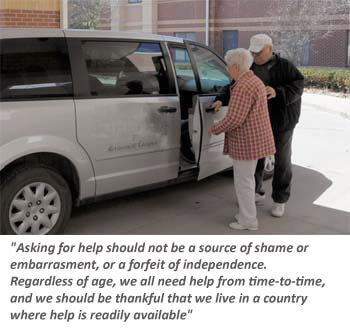
Asking for help should not be a source of shame or embarrasment, or a forfeit of independence. Regardless of age, we all need help from time-to-time, and we should all be thankful that we live in a country where federal (largely started with the Older Americans Act of 1965), state, local and private resources that are geared specifically to help the elderly (and to offer relief to family caregivers) are readily available.

– Article by the staff at Assisted Living Directory
Elise Wrote:
Guateposa – we had a similar situation. As our father’s dementia progressed, it was obvious that our mother could no longer care for him. Against her wishes, we moved him to a very nice senior home with a very nice memory unit. Almost immediately, his memory issue improved because for the first time in months, he was on a consistent schedule, getting his meds consistently and receiving quality healthcare and food. Unfortunately, she was never on board, right up until his death. She made poor medical decisions about his health and now is making them about her own health (which led me to this thread). My siblings and I have no regrets. We know that moving our father to the memory unit significantly extended his life and his quality of life. Unfortunately, our mother was only thinking about inconvenient it was for her to move him. Despite having an ‘independent living’ facility adjacent to the home, she refused to join him there. Which was a shame. Elise
13 January 2017 at 3:31 pm
Guateposa Wrote:
I am in a difficult spot. 16 months ago my parents moved in with me. My mother insisted on having her own apartment. What started out as a one bedroom apartment with a bathroom similar to a hotel room has morphed into an 1100 square-foot addition with its own private bath kitchen and laundry room. Through series of unfortunate disagreements with one of my siblings my mother now wants to pick up and leave and go back to her home which is vacant and in a very congested area with no reliable care. My father is 86 with signs of dementia and my mother is 82 with her own health issues . She insists she is leaving in two months and there’s not a damn thing I can do about it. I’m upset that I have invested my marriage my children and my work to make them happy and I’m worried that I will be stuck driving two hours round-trip to take care of them remotely. I have a busy life and having them live next-door enabled me to easily help them. I just don’t know what to do next.
5 January 2017 at 11:32 am
Sheree Wrote:
My mom is 82 years old and lives in another state. Up until last July, I had an older brother that lived there but he died suddenly in July. It had a horrible affect on both of us but now she has no family in town. She has some good friends who keep me informed and try to convince her to go out to lunch with them but she more and more stays at home. My younger brother died of oral cancer in 2007 so the toll losing two sons has taking a huge toll on her and me. Last night one of her precious dogs died and she had to drive to the Vet with her dead dog. I can’t imagine the grief she is going through, well I can, I also lost one of my dogs two weeks ago. It has been a bad year. I beg my mom to go into a retirement home but she flatly refuses, five years ago we invited her to come and live with us and she refused. I begged her to let someone come in and help with cleaning and chores, she shouldn’t even be driving. She suffers from depression and sleep deprivation. I know it is only a matter of time before I get that call that something has happened. I’m angry that she can’t see what she is putting me through. I have a full time job that I can’t quit and can’t take time off away from. I am grieving myself and just trying to make it through each day, but my worry about her compounds it. She gets nasty with me and says she doesn’t need help. All her friends call me with their concerns about her and I am in touch with her doctor (also concerned). I guess nothing can be done until she falls or gets worse memory problems. I feel everyone’s pain.
4 January 2017 at 12:31 pm
Diane Wrote:
It is encouraging to know my brother and I are not alone. Our aging mother basically refuses to change he solitary living existence.
8 November 2016 at 8:33 am
Asa Wrote:
What a sad state of affairs the “greatest” (vampire) generation of entitled elderly are creating – they draw the most social security for the longest amount of time, never had to caregive for their parents, and expect/demand care from their children by guilting them with “we cared for you.” I have to work a full 7 years longer than they did to receive 1/2 as much social security (if it still exists then), certainly don’t receive “elder care credits for tax purposes, and have to give up the best 10 years of my money making career because they are demanding oldsters who demand servitude. I recently saw the movie “Logan’s Run” and find myself uttering ” carousel” when dealing with my elder burden. Asa
1 November 2016 at 1:52 pm
Jeff Wrote:
My father is 86 and takes numerous medications for heart failure. My mother has beginnings of Alzheimer’s and dementia and sits for days on end in a recliner. My father says he is depressed and frustrated but when I arrange for in home care he refuses saying it is like the burial phone calls he gets from advertisers. I was finally able to get a cleaning person to go in once a month only because they clean my house too as I am busy working al the time. My brother gives no help and I can’t pay for everything as I am divorced paying child support.
Somehow I knew when I left home at 25 I would wind up taking care of everything myself. I have tried to get assistance services for them and they refuse. I have tried to get assisted living arrangements but they wont leave deciding to die at home. The latest solution offered was my father needed to die firs,t in his words, so I can do what needs to be done. Thank you so much!
My father has fallen several times and when I call to check on them he tells me he went to the hospital a few days ago. I have always told them to call me if I don’t call and let me know they are ok. I take them food and check their refrigerator. He still drives even though he should not and refuses to stop. They are on a fixed income and I have contacted the utility company to get a senior rate reduction. I have to get a cleaning company to clean the chairs as they reek of filth. When I bought the chairs it was to replace old ones that were literally falling apart and filthy. My mom’s dementia kicked in and she was horribly mean and crying over old chairs to the point my father tried to find them in the trash. I’m fed up with the dirty clothes, smelly furniture and refusal to help themselves. The grandkids wont visit because of all this and taking them out I’m embarrassed at their appearance.
11 October 2016 at 2:51 pm
Desperate Wrote:
my trouble is my 85 yr old father knows he needs help, treats everyone around him like a servant and refuses to go to a nursing home, he needs full time care, i am at my wits end, he is abusive in so many ways, manipulates and lies all the time, he is living with me and my husband and caregivers keep quitting because of his abusive language, and attitude, i do not know what to do Desperate
12 August 2016 at 2:55 pm
Tara Wrote:
I am speaking about an88 yr old “stubborn”senior citizen that’s totally in denial of admitting she needs care and assistance.(Homecare,or to be put in a Nursing home.)She has had only one son to care for her, and doesn’t share the truth with doctors. She’s content to go on as she is. I’m her son, and it’s taken it’s toll on me! what shall I do?
4 August 2016 at 1:23 pm
Patty Wrote:
You know, my parents are gone. My family of 7 children cared for my mother with parkinson’s and dementia for 8 years before she died. She was always a passive and pleasant person, so she was always happy except for the days that she got really sad about life moving on without her. Now, I’m dealing with my deceased husband’s parents. I don’t have to do it, certainly, but I choose to help to honor my late husband. I have never remarried. I am 58 now and our daughter has her adult life 1,000 miles away. The thing that strikes me about all these stories is: Why in the hell are we doing this to ourselves? I mean, there are things like DSS that step in when there are reports of abuse/neglect. If we have to treat them as independent adults, then they should have to abide by adult laws!! The fact of the matter is, society has changed immensely. The days of Uncle Bert coming by to sit with Mom or Dad are over. People are busy, they’re self-absorbed, and many/most don’t know how to help, or aren’t willing. Let’s just state it like it is!! In my situation, my father in law, 92, is trying to keep himself and his wife, 91, Alzheimer’s at home. I have stayed with them weeks at a time, the most recent when she had a bleeding ulcer and would have hemorrhaged to death if I hadn’t been there. To be honest, sometimes I wish I hadn’t been there. He is so cruel to her about her dementia. He corrects her every move which makes her so upset and makes her worse. I honestly think she would be so much better without him, but like many, he controls the assets and won’t spend the money for the help. What the heck am I supposed to do with that? That’s insanity, folks. What? As Americans, we can just choose to neglect our mates of 70 years and just hope for the best that they don’t fall and suffer untold misery because their spouse is an ass who won’t allow help in? This is crazy talk. Right now, I have just come back 110 miles to my home. These people are not even legally my family anymore, but I love them. I want to help them because that’s who I am, and I flat refuse to play this game anymore. I want to live, too. I gave up a decade of my life and my daughter’s life to care for my mother. I don’t regret it, but if I had it to do over, I would do it differently because everyone else’s lives just went on as normal. Now, I’m alone. I have no one (which friends warned me of). I trust that God will provide for me as he has thus far. But, it’s very difficult. I’m disabled and now alone, and I’m facing the same losses… my little place in the country is getting to be too much for me. Change is very, very hard. The fact that lines are staring me in the face in the mirror is very, very hard. Where has the time gone? Where did my life go? Why, as the richest country in the world, don’t we handle this matter of aging and dying and make it a normal part of living instead of denying it and being so afraid of it all. We’re ALL going to do it!! Why don’t we demand from our leaders in government more places that give people dignity and respect in their final days instead of duking it out with family about money and everything. I’m sure there are other countries that do a stellar job of handling this matter. We’re so gosh-darned independent, we won’t even wear helmets in my state when driving a motorcycle. I mean, c’mon, it’s in the same category. Oh, you don’t want anyone telling you what to do, but now I’ve got to wipe your butt because you didn’t wear a helmet and have a head injury. Where do we draw that line between freedom and stupidity? I’m tired, and I’m done. I’m going to let him and his son figure out the rest from here. I pray daily for my mother-in-law. She’s constantly falling, and he’s so mean to her. It’s just not right. Bobbie
3 August 2016 at 8:51 am
Patty Wrote:
Has anyone called social services? Does that work? My father in law (83) who doesn’t even know HOW to cook is “taking care” of my mother in law who has Alzheimer and diabetes. He refuses to move the both of them into a home. I am concerned about them and want to “force” them. Any ideas? Patty
6 June 2016 at 1:55 pm
Mary Wrote:
All these blogs make you feel like you are not alone but our elderly parent problems still weigh heavy in your heart and physical being. Mom 84 year old mom fell and hit her head/concussion, recovered from that in two weeks with me sleeping on the floor in her apartment. During the fall she apparently hit her stomach also and had to have stomach surgery. Make story short, 4 momths of me caring for her, three hospitals, 8 trips to ER, 6 weeks in rehab, 3 weeks in her own apartment. Refusing to accept help. Very confused about the past four months. Not believe the dates of her injury and surgery, etc. Extremely weak after loosing 19 pounds (she was already thin). Not sure if she can’t walk too long due to weakness, weight loss, anesthesia dementia, prolonged confinement, ect. Doctor’s of no help. She also wants to drive now and won’t listen to family telling her she is not ready and she could kill someone or herself. Just refusing any discussion about anything. She does not even let her neighbors come over. I am fed up and tired.
9 May 2016 at 2:58 pm
Connie Wrote:
My mom is 87 and is still in relatively good health, but suffers from some Dementia. I have 3 siblings ( 1 local and 2 live 2 hrs away. I have POA and take care of finance,etc. I live 20 minutes away from her, we have someone with her from 6 pm – 9 am, but because I don’t go everyday she just rakes me over the coals every time she talks to me, my husband and I stay with her on Wed from 6-9 to give the evening girl a night off. We buy her groceries, pay her bills, we always go one or 2 more times a week besides the Wed night and I call her everyday, most days twice, Yet every time she talks to me, I don’t care anything about her, She despises my boss, my in-laws and anybody that she thinks gets any attention at all from me. My husband is wonderful,but it is,really taking its,toll on me. My brother mows and gets the trash which takes him to her house once a week. My two sisters come to see her only 3-4 times a year. I feel angry toward them and her. I feel trapped. I want to help her but with her it’s all or nothing. Does anyone have any advice for me? I’m desperate.
2 May 2016 at 1:38 pm
Miriam Wrote:
I moved back to my home country 2 yrs ago because my mom (86) needed care. This meant I gave up a very good job and most of my life, but I love her and she raised me, and I could not let her suffer alone (my dad died 10 yrs ago). Unfortunately, she does not appreciate it at all. She insists that she doesn’t need help, that all her illnesses (arthritis bad enough she can’t walk, COPD, various problems with her digestive system, incontinence) are only temporary. I can’t get a good job because she refuses any help by people she doesn’t know (although we would be able to pay for help) and would rather euthanize the dog than let him be walked by anyone but me or my sister (who is rarely available). Even a simple thing like making a grocery list and asking her to double check it so that I can give it to someone else in case I have no time to buy things for her causes a temper tantrum. It took ages until she accepted incontinence pads (she preferred to pretend there was no problem and put towels in her underwear), and she only did it because she could not get out of bed after a bad flare of arthritis. She refuses to use a walker or consider physical therapy. I’m always scared she will fall down the stairs or fall and break something when I’m out of the house, because if she is able she hobbles around with two old walking sticks that belonged to my dad and has already fallen a number of times (but luckily didn’t break anything). She goes to see doctors but never asks any questions and regularly declares them stupid if they tell her there is no miracle treatment for her ailments. I’m at wit’s end. I was hoping to help her to live as independently as possible and to return to my job as soon as she has professional care. Instead I’m trapped because she is steadily getting worse and I can’t just ignore her and let her hurt herself. I suspect she has early stage dementia, but of course we will never get that diagnosis because she will never tell any doctor the truth beyond ‘my hip hurts because I fell’ (no, because of osteoarthritis, which two other doctors already told her…). On top of that, she never once told me thank you. On the contrary, we constantly argue because I do some things differently than she is used to (for example, I bought a clothes dryer and I removed all the carpets from the upper floor, and I changed the garden to be more easy to manage). Every single step, no matter how small, is subject to weeks of discussion and arguments. She still tells people I’m treating her badly because I moved her bedroom to the ground floor (she can’t walk stairs anymore, of course). It’s frustrating, and exhausting, and more and more often I feel tempted to take a job offer abroad, but I know she would die without my help.
16 March 2016 at 1:21 pm
Cynthia Wrote:
What you wrote about your mom is exactly what my sister and I are going through with my dad. Ever since my mom had passed way just over a year a go… he has changed so much and has no will to live…… We both live an hour away and this is so stressful on the both of us and our families. cynthia
19 January 2016 at 3:26 pm
Stephanie Wrote:
I am in the same situation with my 93 year old dad refuses to accept help in the home. Takes care of my mom 89 who has a failing heart and limited dementia. Refuses all help. Wont bath because its too much work, He fires cleaning help that I hire, will not take any aide help for my mom, nearly started the apt on fire, wont take public senior transportation, drives across the street to go “food” shopping, wont wear a hearing aide cause he doesn’t need it, but he is deaf as a doornail and drives.
I am the one who has to go wash their bathroom, clean their kitchen, scrub their floors. Their bath and grooming is very limited and looked ungroomed and wear dirty clothes. I buy him new things and wont wear them, cause “he in the house and no one will see him” so he wears the same undershirt for 4 days, yellowed and stained. Takes the clothes I toss out and puts them back in his drawer. Feeds my mom so little, cause he says he is not that hungry anymore so he doesn’t cook.
I bring in takeout or take her out and she gobbles up the food. Offer to get them assistance? Will not let me get them any assistance at all and living one hour away and working, it is impossible for me to be with them. Talk to him? He said he is not moving and will die there rather than move. This thanksgiving he refused to get in the car, said he would rather stay home and relax then come and spend the day with my family – his grandchildren great grandchildren and his two daughters. My sister picked up my mom, and brought her to spend a wonderful afternoon with her family, telling him we will bring home a nice plate when we drop my off mom back home and he can have the day to relax if he wants. What does he do? gets stinking drunk, so drunk (that he was declared legally intoxicated) as he was pissed that he was alone and no one stayed, calls 911 and tells them he doesn’t know where his wife is.
The cops come and he tells them to call my house and that he just wants to die, and what does that mean? Now he is a threat, so he gets picked up and brought to the hospital for suicide watch. Drunk but lucid enough to tell them to call me, make a spectacle and disrupt everyone because he just didn’t want my mom to go to visit the family. Spiteful. So how does the Thanksgiving go? Break up the thanksgiving meal, drive Back down 1 hour to the hospital, sitting in the emergency room while they evaluate him for 4 hours, after monitoring him and CT scans, just to diagnosis him as legally drunk. This is what the man does, doesn’t want help, lives in filth and wants to drag everyone down with him. So instead of enjoying our family, my mom and I got to spend Thanksgiving evening in the emergency room.
All because he didn’t want to be with the family and be alone in his apt, and have his way, then wanted pity for himself that he was left alone. Let them feel independence? This is what he does. Ruins any good time for anyone. I am at my wits end. He is beyond stubborn. He is a selfish man. He has the means to move into an assisted living but he refuses. I have brought them to a few, and he said he wont live with old people. He would rather age me and my sister. I am 62 and my sister is 70. This is not good for both of us. Me being the closest geographically, get the bulk of the care. I love these articles about patience with the elder parent, they make it sound so easy. In our case, it is not. I have called a county social worker and he will not let them in the house to even talk about what kind of aide can be received. He says he can handle it, but puts them in such squalor that I have to come in and clean up. I just don’t want to do this anymore. He has complete control of all of their assets and wont spare a dime for any care. The housekeeper I hired and paid for he cursed at her, and kicked her out, because she was taking too long cleaning the kitchen. This is the degree of “stubborn” that is beyond pride don’t you think? Harsh? yes, but I don’t care. This is a situation no child should to have to bear. Stubborn is not even close to the word to describe this. Difficult neither.
It is impossible any way you look at it. For my mom, I do it, mom with her limited dementia is a blessing because she doesn’t really remember half the time the arguments my sister and I have with my dad. It is a blessing for her. and she doesn’t even realize how badly they are living and how much better there life could be. Thank you for letting me vent. Stephanie
29 November 2015 at 11:25 am
JerseyGirl Wrote:
I moved halfway across the country two years ago to provide help for my 91-year-old mother. She has begun mentally deteriorating, and refuses any help except what I personally do for her. She is convinced that my husband is trying to make her look crazy and “put her away”, and will neither allow him in her house or come to our house. Any time I suggest hiring a home aid, she says she doesn’t want someone spying on and stealing from her. My husband and I need to start thinking about our own futures – we spent most of our savings moving out here, and haven’t been able to secure jobs that will cover the higher cost of living as well as leave us the flexibility to take care of her. So, we’re moving back to where we came from. I’m hoping that by removing ourselves from the equation she will actually take advantage of some of the resources at her disposal – free transportation, meals on wheels, home health aid, something. She refuses to even consider moving – the only way she will leave her house is “feet first”. I don’t want to give up, but I feel I have no other options. I know what it will likely mean – the state will eventually step in, with conservatorship, and all the decisions that she could have had a hand in will be made for her. And she will end up exactly where she said she never wanted to be.
15 November 2015 at 1:12 pm
Melisa Wrote:
This is almost exactly what we are seeing with our 93 year old mother. She is on chemo, once a month shots. Is losing weight. She is 1200 miles away from all family. Her friends are worried about her. She is mentally sharp, still drives, on the phone says she is fine. She has plenty of resources to pay for help but won’t get any.
23 October 2015 at 9:15 am
Glen Wrote:
It’s indeed common for seniors to refuse any help like home care because it can seem to them that their age is now a sign of weakness. But if like this, you are with a loved one that is stubborn about the idea, there’s nothing else that you can do but openly discuss with them about the matter. You have to listen to their side though because for sure they will appreciate knowing their side is important for you.
9 January 2015 at 2:06 pm
Michelle Wrote:
One of the most aggravating things to be stubborn about is not taking meds as directed. My mom just refuses sometimes, and it pains me to know that it is only hurting herself. Sometimes I feel like I am dealing with a child.
14 March 2014 at 11:02 pm
Veronica Wrote:
My dad was the same way – stubborn, and not wanting to budge with anything. When we finally did get him to move, he was as happy as could be.
5 June 2012 at 11:16 am

� 2018 Assisted-Living-Directory.com

No Obligation
Assisted Living with When Being A Stubborn Senior Becomes Unfair To Family & Caregivers