Parkinson's Disease and Assisted Living
- By Dr. Maria De LeonFour Types of Geriatric Headaches & Their Significance
- By Dr. Maria De LeonBreast Cancer in Elderly Women with Neurological Disease

- California Assisted Living Association (CALA): "The voice of Assisted Living" Phone: 916.448.1900 ;
- Elder Abuse: Report suspected abuse by calling 800-677-1116
- A Printable (.pdf) of Important Questions To Ask FacilitiesFacility Questionnaire
- [Video]Assisted Living Definition & Description
- Discussing Small vs. Large FacilitiesFacility Size

Summary: A discussion about the relationship between Parkinson’s Disease and Assisted Living. Assisted Living can offer an important and viable living and housing alternative for individuals affected by Parkinson’s – a progressive and debilitating disease. Assisted Living can also provide substantial relief to those who have assumed the role as caregiver. This article is not to be considered as, or used as medical advice.
I receive a fair number of daily emails to our site about all aspects of assisted living. Often times, the emails and messages I receive further clarify to me that assisted living is a confusing subject, and industry – and that families faced with the need for long-term care for a loved one may not fully understand what assisted living offers, or can do for them.
Assisted Living seems to have embedded a common perception with many of us that it can only help seniors, or those with memory/dementia disorders. I think this is a natural assumption, since most of the marketing and advertising coming out of the assisted living industry is geared towards seniors, and is usually described in aging/senior terms, or in terms of Alzheimer’s or memory care.
Parkinson’s Disease, and questions pertaining to Parkinson’s, is a common element to many questions and messages I receive – most often generated by a family member looking for help or care for a loved one who has Parkinson’s disease. Usually, the family member is a senior, but there are cases with early onset Parkinson’s where a younger individual may not be able to live on his/her own – thus needing ongoing, professional care in a long-term care environment.
Here are a few of the questions we have received from families or individuals asking about assisted living and Parkinson’s Disease.
One of the messages is from an individual asking about her sister, who has Parkinson’s, and is only 49 years old – which helps to dispel the assumption, or myth that assisted living can only help seniors:
“My parents just recently moved to Aston Gardens from their villa in Boca; I’m not sure a large facility is where they will be best cared for. My step-father is getting somewhat forgetful (not overly) and mom has “Parkinson’s with dementia.” They need to be together and they both need meds administered daily: dad, 2x/day and mom, 3x/day. Mom needs assistance with toileting and getting dressed and undressed . It seems that these smaller places might not handle such hands-on arrangements. Can you please let me know more about how your “home” operates?” – Caron “I am a 61-year-old male looking for inexpensive living arrangements. I have Parkinson’s disease and receive SSI. I prefer the coastal air, as I also have allergy problems, and I am looking for assisted living or congregate housing with space available in the state of California. On the plus side, computers have been my life. I can teach about computers” – Wayne
“Both my mother and my sister live in NH. My mother has Parkinson’s; my sister has MS. I was wondering if you accept MedicAid.” – Nanci
“My dad has Parkinson’s and Lewy Body Dementia and is in need of long term assisted living because he is losing strength in his legs and arms. Do you have the capability of housing someone like my dad?” – Rosemarie
“My father was living at Belmont Village but his care got to be too much for them and he is now in a nursing facility. He would really like to be somewhere with his own room and better food and I am wondering what your facility offers. He has had Parkinson’s for 40 years, needs incontinence care, is wheelchair bound. He is most of the time quite mentally competent. He is also a VA patient….I don’t know if the VA would apply any money towards the cost of a place like yours, but he does have a decent income as well. Do you think he might fit in there?” – Kathy
“My sister has advancing Parkinson’s, yet is only 49. Will you accept her in your assisted living facility and what is the monthly cost? Thank you.” – Kathy L
Video Produced by Assisted Living Directory
We asked our wonderful friend and Contributor, Dr. Maria De Leon (who lives with PD), her tips for time management for someone with Parkinson’s Disease.
Parkinson’s Disease:
Very basically, Parkinson’s Disease is a “progressive disorder of the nervous system that affects movement.” This disease develops gradually, and gets worse over time. There is no cure, but a number of different medications can treat the symptoms, and help to manage the disease. Some of the most notable symptoms include:
1-800-278-9122Pricing & Availability
Get Pricing
- Tremors: This is one of the most common characteristics – and many times begins in the hands.
- Slowed Motion: This is also called bradykinesia, and causes difficulty with voluntary movement.
- Rigid Muscles
- Impaired posture and balance
- Speech Changes
- Dementia
- Loss of automatic movements
There are a number of suspected causes of Parkinson’s Disease, including genetic factors as well as environmental. Changes will occur in the brains of people suffering from Parkinson’s, including a lack of the chemical messenger in the brain called dopamine; norepinephrine levels (another chemical messenger in the brain); and the appearance of unusual protein lumps called Lewy Bodies (usually associated with Lewy Body Dementia).
We (Assisted Living Directory) don’t want to go too far into the medical end of Parkinson’s Disease – as we are not experts, and we are not doctors – so if you wish to read more about Parkinson’s Disease from a reliable site, we recommend looking at the Mayo Clinic’s description of Parkinson’s Disease
Our goal here is only to offer a basic synopsis, which will lead into how assisted living can help someone with Parkinson’s Disease.
10 Signs You Might Have Parkinson’s Disease – by Dr. Maria De Leon (Neurologist)
Assisted Living and Parkinson’s:
At it’s core, Assisted Living exists to help those who are having difficulty living on their own. Assisted Living offers help with day-to-day tasks such as dressing, bathing, housekeeping, medication management, cooking, round-the-clock emergency care, and a social/recreational environment. In addition, some facilities may offer physical therapy, hospice care, and advanced care for different disorders, such as Alzheimer’s or Parkinson’s. Many facilities also offer transportation to and from medical appointments, therapists or hospitals.
In those same terms, the core areas that Parkinson’s patients need help with on a day-to-day basis are very similar: help with day-to-day activities, especially as symptoms get worse; dressing and bathing; avoiding falls (many assisted living facilities have handrails, and ramps); management of medication, physical therapy; help getting to and from doctors appointments and medical services (especially after driving a vehicle becomes impossible).
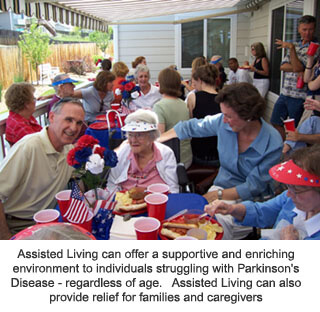
In addition to providing a viable, alternative living arrangement to someone with Parkinson’s, assisted living, in turn, can provide substantial relief to those loved ones who have had so assume the role as caregiver.
- Is the facility licensed?
- Is the facility in good standing with the health department/state in terms of code or safety violations?
- Are the staff adequately trained?
- Is there access to physical therapy?
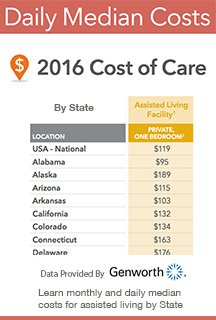
- What are the costs of the facility, and do additional/specialized services and amenities incur an additional charge?
- Is the facility equipped to handle residents with balance, orientation and memory difficulties?
- Is the facility well respected, and receive favorable reviews?
- How long has the facility been in operation?
- Can the facility handle a progressive disease that will get worse over time?
- Can the facility safely and responsibly administer, store, and record the medications you need to take?
- Is there 24 hour care on-site care?
- What personal care services are provided, such as bathing, dressing, shopping etc.?
- Can the facility accommodate a special diet, if necessary?
- What is the discharge policy (if there is one)?
Some Of The Important Questions To Ask When Considering An Assisted Living Facility:
Of course, these are only a few of the important considerations. Your personal preferences, such as your social and recreational needs will be considered, as well as location, and size of facility. This is not to mention the cost of the facility – which is something you will need to get in writing – including additional or “hidden” charges.
Assisted Living is here to stay, and the number of facilities, as well as people moving into them, is growing rapidly. The outdated perception that assisted living can only serve seniors, or people with memory disorders is becoming exactly that – outdated….a thing of the past. Facilities are becoming more and more sophisticated, with ever more amenities and services available. Anyone with Parkinson’s, regardless of age, may eventually require ongoing, round-the-clock help that is unreasonable to expect from loved ones or family members. This is where assisted living can play a significant and meaningful role in the care, happiness, and well-being to those who need it.
Help Finding A Parkinson’s-Appropriate Facility (Nationwide):

Help Finding Assisted Living for PD
Assisted Living Directory has helped 1000’s of families (including our own!) to connect with great care facilities! You can read our personal experience here!
800-279-6671Pricing & Availability
Get Pricing
- References & Other Important Sites that Discuss Parkinson’s Disease and Assisted Living:
- http://www.mayoclinic.com/health/parkinsons-disease/DS00295 A reliable source for detailed information about Parkinson’s Disease
- http://www.webmd.com/parkinsons-disease/assisted-living-parkinsons Parkinson’s and Assisted Living – a WebMD article discussing the relationship between the two.
- http://www.parkinson.org/caregivers.aspx Information for caregivers as it relates to Parkinson’s Disease
- http://www.cirm.ca.gov/ California Institute for Regenerative Medicine – Video credit (used in article)
- Article by the staff at Assisted Living Directory
I did do a basic search using the term “assisted living Parkinson’s Disease” and a number of important and helpful sites came up. Here are just a few:
Responses to this article:
Coments Here

� 2018 Assisted-Living-Directory.com

No Obligation
Assisted Living with Parkinson's Disease and Assisted Living